Safety now and in the future
Safety first is Ovako’s philosophy for every aspect of our operations. In recent years this has led to a strong improvement in our Lost Time Injury Frequency Rate (LTIFR) that are now well below the industry average. In fact, we have reduced injuries with sick leave by 95% over the last seven years explains Phetra Ericsson EVP HR, Communication & EHS Ovako Group.
Moving forward, we are now focusing on our Total Recordable Injury Frequency Rate (TRIFR). This figure indicates the number of accidents requiring sick leave, alternative work and medical treatment per million working hours . As the graph shows, Ovako has been able to reduce the number of accidents by 40% over the past six years. But we are not satisfied with this. Our goal is to achieve a zero-accident workplace.
Safety program focused on both a structured way of working and cultural change
To achieve our ambition for a zero-accident workplace we have established a structured way of working with clear goals and focus on accident investigation and implementation of safety measures. The aim is to change the safety culture and attitudes for all our employees and to establish the responsibilities for our managers in making this happen.
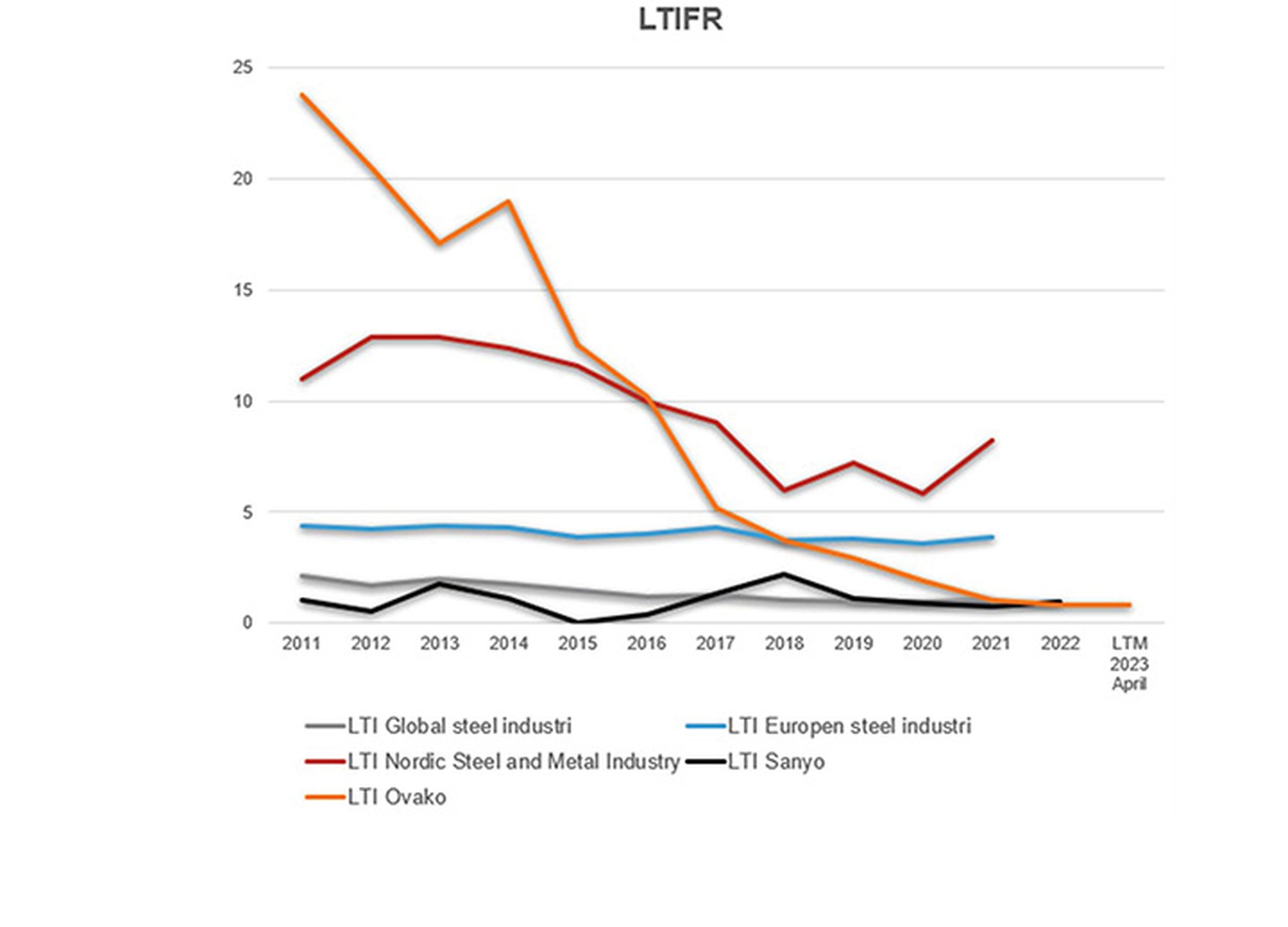
Ovako has seen a strong development in the reduction of LTIs
This is the actions we have taken so far that have affected our improvement the most to reach our goals:
1 – Creating a systematic work environment
Risk analyses, safety rounds, investigations, reporting of risk observations.
Evaluate risks before someone gets injuredAllocation of Capex. Technical protection to minimize risk of injuries
Safety instructions
Common IT system MIA
2 – Establishing common goals and structure
Common goals within the Ovako group
Common key performance indicators (KPIs) and standardized definitions
Structured and clear follow-up in each Business Unit and in the GEM
3 – Engaging top management
Commitment in GEM (Group Executive Management)
Start all meetings with safety
Management safety round
Control of basic PSE and work clothes
Safety week
4 – Communicating the responsibilities of managers
Clear responsibility (delegation)
Follow-up on each section
Safety conference – focused on the Bradley curve that shows the link between accidents and corporate culture
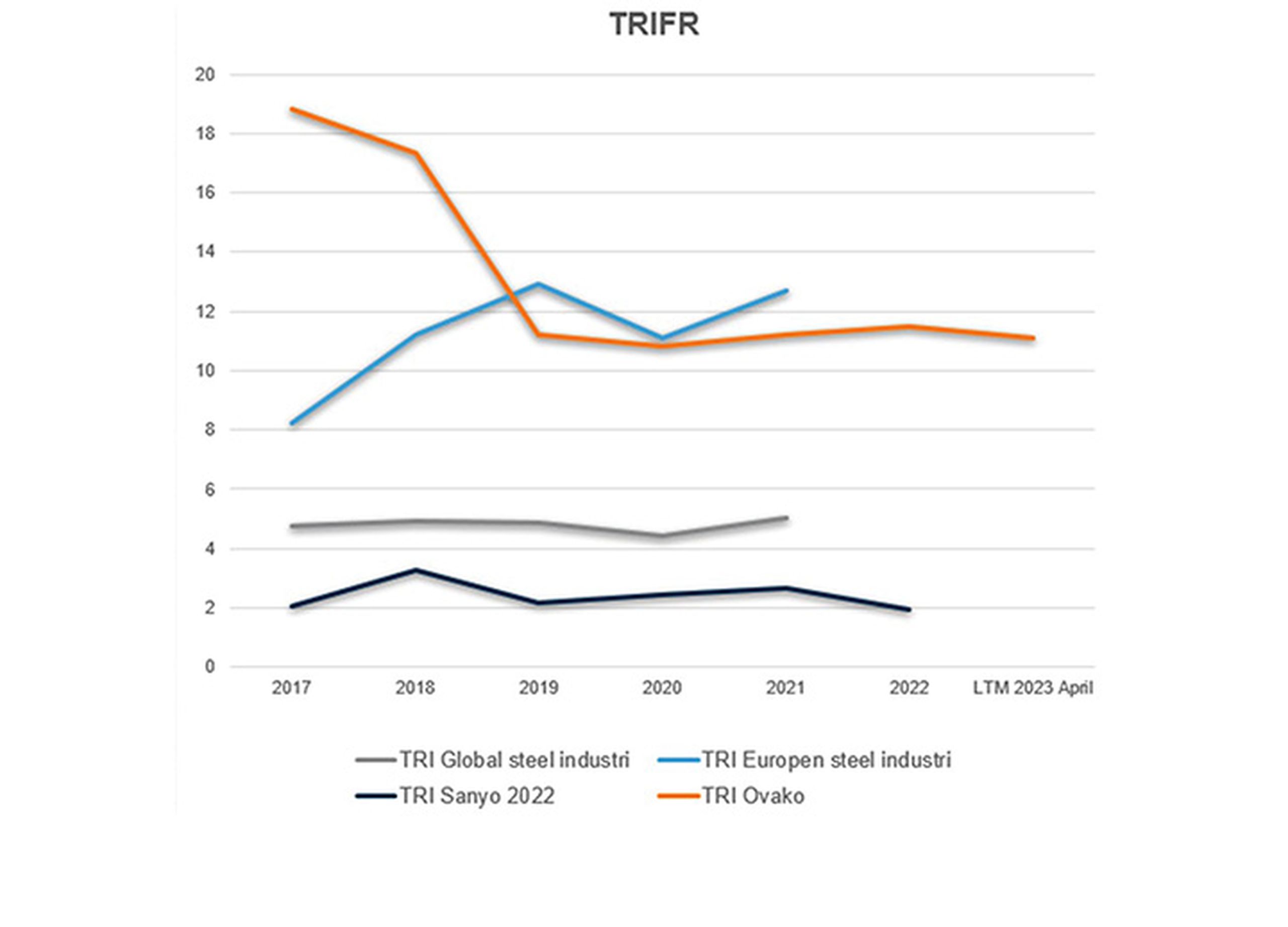
Ovako has reduced the total number of accidents by 40% over the past six years
5 – Promoting common safety work
Common focus areas with structured follow-up
Collaboration and exchange, common templates
Lesson learned within the Ovako group
Safety education for all employees and managers through meetings and e-learning
Specific activities that are making a difference
One activity that we are particularly proud of is our “Dare to Care and Dare to Act” workshops for all our employees. Their aim is to encourage everyone to dare to care and speak up if they see something that could be a safety risk. If they see a colleague doing something risky, they should speak up, we call this “never walk by”. Many people have shared feedback that it’s much easier to prevent unsafe actions now. Everyone knows that they can, in fact they must, stop a colleague in an unsafe situation, and the colleague also knows that they are doing it out of consideration.
Other activities include
Developing our safety program and safety standard
Alternative work and clear safety definitions in relation to LTI
Risk analyses and safety rounds including organizational and social work environment
Establishing the top five risks and guidelines for prompt actions based on the biggest risk
Introducing a new process for incident investigation
Providing safety information through multiple channels
Our future focus
The next steps for Ovako are to explore the dynamic relationships between the various elements involved in safety. Because accidents are very rarely due to a single cause. Most occur due to deficiencies in the interaction between human, technological and organizational factors.
The aim is to embed safety as an integral part of our production activities. This embraces three focus areas for 2023:
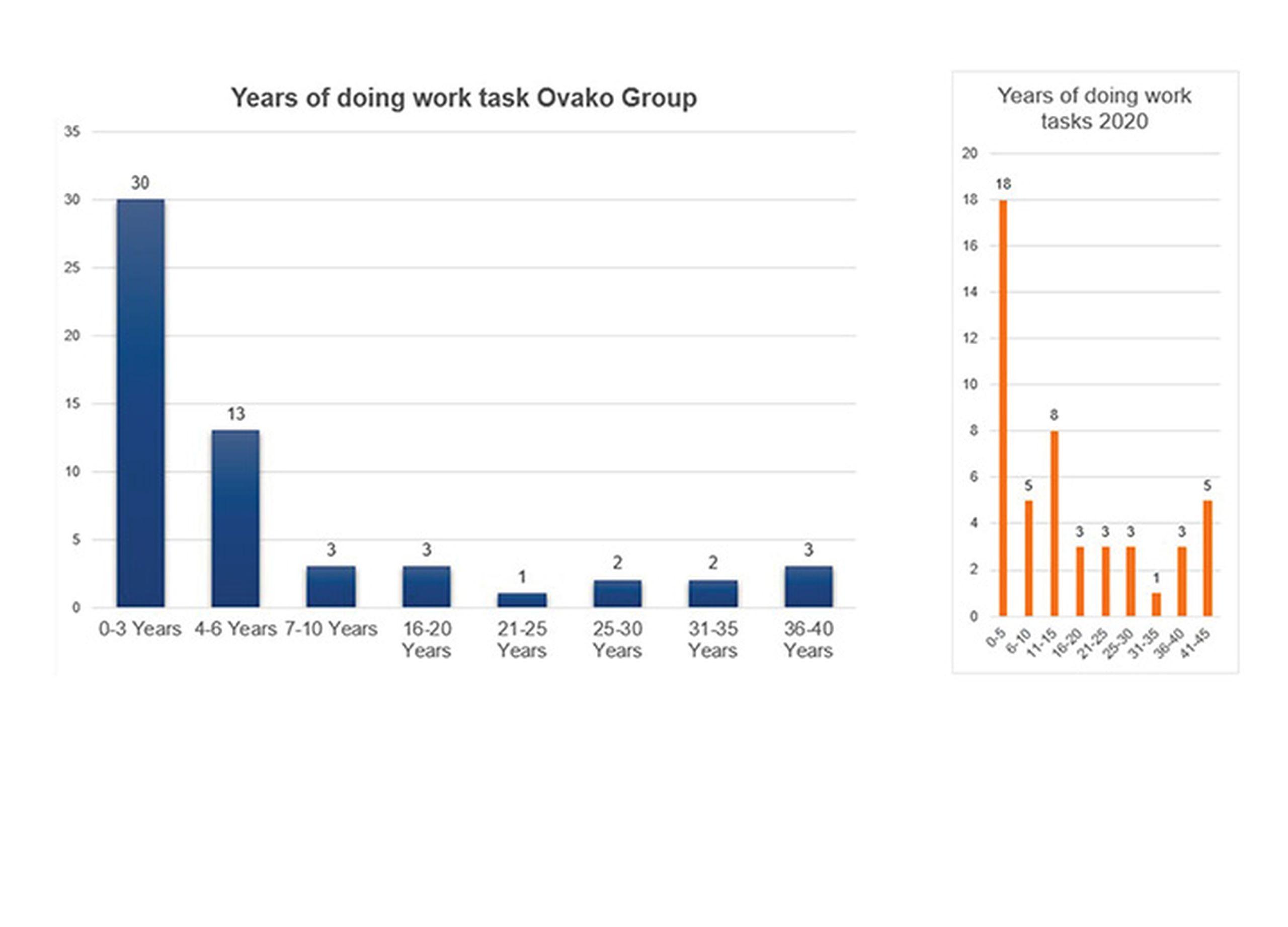
There is a strong correlation between the number of years working on a particular task and the number of accidents
1 – Safety culture
Minimize risk
Connect to direct feedback
Act against unwanted behavior
Lead by example – be a role model
Be consistent over time
These elements were discussed at our safety conference in May 2023.
2 – Systematic work environment – analysis of work task
To show Ovako’s level of commitment, in 2022 we implemented 7,700 safety actions – that is nearly three per employee. And in the period from 2010 to 2022 we have implemented a total of 81,000 safety actions.
3 – Systematic work environment - introduction and training
The impact of training and experience is shown in Figure 3. The level of accidents for employees working on a particular task for four to six years is well under half that for people who have been with us for up to three years.
Safety is embedded in Ovako’s strategic plan 2021-23.
We have set ourselves two key short-term goals to achieve on our safety journey:
LTIFR <2 by the end of 2023
TRIFR <8 by the end of 2023
But our ultimate vision is to create a zero-accident workplace for all Ovako sites. To achieve that we are committed to total vigilance and constant improvement.